Next working day delivery by

 CALL US
 Monday to Friday

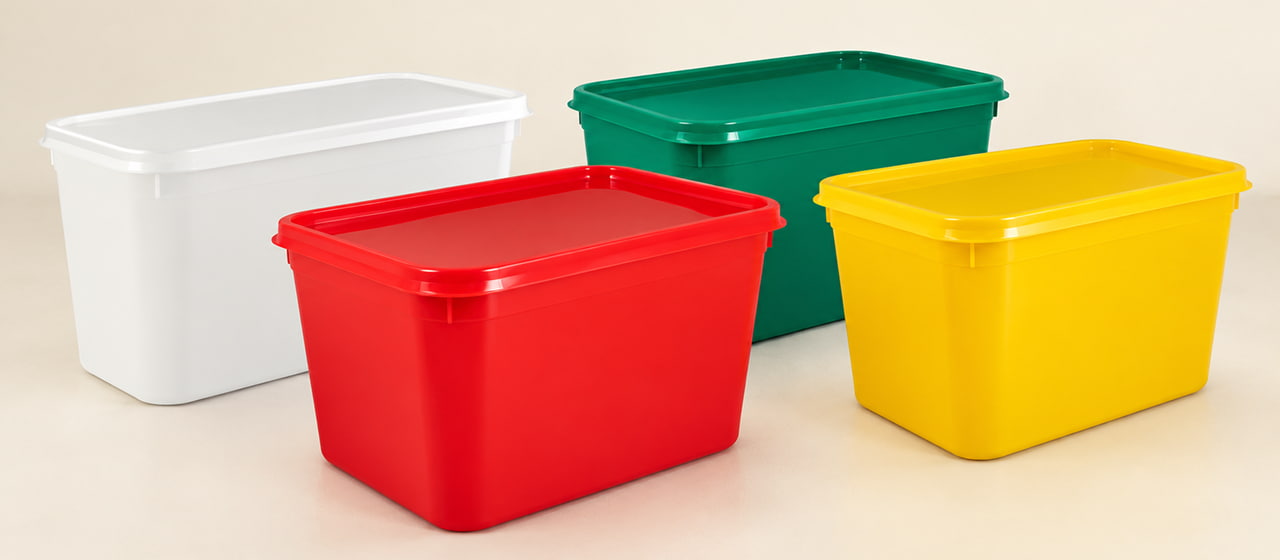
A 4-litre tub of ice cream gives you somewhere between 36 and 80 scoops. Three things decide where you land in that range: the size of your scoop, how your staff use it, and how much ice cream is lost to the sides and base of the tub.
That gap matters more than most operators realise. At £2.50 a scoop, the difference between a tight 50ml portion and a generous 100ml one is worth around £100 per tub. Across a full summer of trading, that can be the difference between a healthy season and a disappointing one.
This guide works through how many scoops in a tub of ice cream you can realistically expect, with figures for the most common tub sizes. It also covers choosing the right serving cups and setting portion standards your team will follow. Finally, it shows how to plan stock for events and for the heatwave weeks that now drive so much of the UK season.
How Many Scoops in a Tub of Ice Cream? The Basic Maths
The starting formula is simple. Divide the tub volume in millilitres by the scoop volume in millilitres.
A 4-litre tub holds 4,000ml. With a 50ml scoop, that’s 80 scoops on paper.
Scoops Per Tub at Common Portion Sizes
| Scoop size | 4-litre tub | 5-litre Napoli tub | 4-litre tub with 10% allowance |
| 40ml | 100 | 125 | 90 |
| 50ml | 80 | 100 | 72 |
| 60ml | 66 | 83 | 60 |
| 75ml | 53 | 66 | 48 |
| 100ml | 40 | 50 | 36 |
The last column is the one to plan with. Paper figures assume every drop leaves the tub as a perfect portion, and that never happens.
Why Real-World Yield Is Always Lower
Ice cream clings to corners and to the base of the tub. Surface ice cream softens when the lid is open. Tasting spoons, dropped cones and remade orders all come out of the same tub.
Scoops also rarely match the scoop’s level capacity. A server who presses down to make a neat ball packs in more than the bowl strictly holds.
A 10% allowance is a sensible planning figure for most parlours. Trade benchmarks support it. Sidoli’s values its free freezer stock at 42 scoops per 4.7-litre tub. That works out at roughly 112ml per scoop once losses are counted, or about 36 scoops from a 4-litre tub.
It also lines up with retail packs. A 500ml tub of Ben & Jerry’s is designed to provide five portions, which puts a manufacturer’s portion at around 100ml.
What the Numbers on Your Scoop Actually Mean
Most portion scoops carry a number rather than a millilitre size. That number tells you how many scoops the tool gets from a US quart, which is about 946ml. The higher the number, the smaller the scoop.
Common sizes on standard charts are:
- #16, holding about 59ml
- #20, holding about 47ml
- #24, holding about 38ml
Treat these as guides, not guarantees. Sizes can differ slightly between brands, so test any new scoop before you set prices around it.
The quick test is to scoop ten level portions into a measuring jug. Divide the total by ten, and you have your true portion size.
Gelato served with a spatula is harder to standardise by volume. Many gelaterias portion by weight instead. They weigh a sample serve each morning so staff can see what the target looks like in the cup.
Matching Tubs and Containers to Your Portions
Portion planning works in two places: the bulk tub behind the counter and the cup in the customer’s hand.
Bulk Tubs Behind the Counter
The 5-litre Napoli tub is the standard format for scooping cabinets in the UK. Many display freezers are designed to take plastic 5-litre Napoli tubs, with 4-litre baskets available as an option. If you’re buying a cabinet, check which format it takes before you order stock.
Four-litre tubs suit smaller batches, production runs and freezer storage. Rectangular shapes also stack more efficiently than round ones, which saves space in a chest freezer during peak season.
Whichever format you choose, consistency helps your planning. Running every flavour in the same size of ice cream containers means one scoop count applies across the whole cabinet.
Serving Cups for Customers
Your serving cup should fit your portion without forcing staff to overfill or leaving the cup looking half empty. Garcia de Pou’s sizing guide suggests 90 to 120ml for a single scoop and 150 to 180ml for two, with 240 to 300ml for three scoops.
Allow a little extra room if you add sauces, sprinkles or wafers.
An oversized cup is a hidden cost. Staff instinctively fill the space in front of them, so a cup that looks empty invites a bigger scoop.
How Over-Scooping Eats Into Your Margin
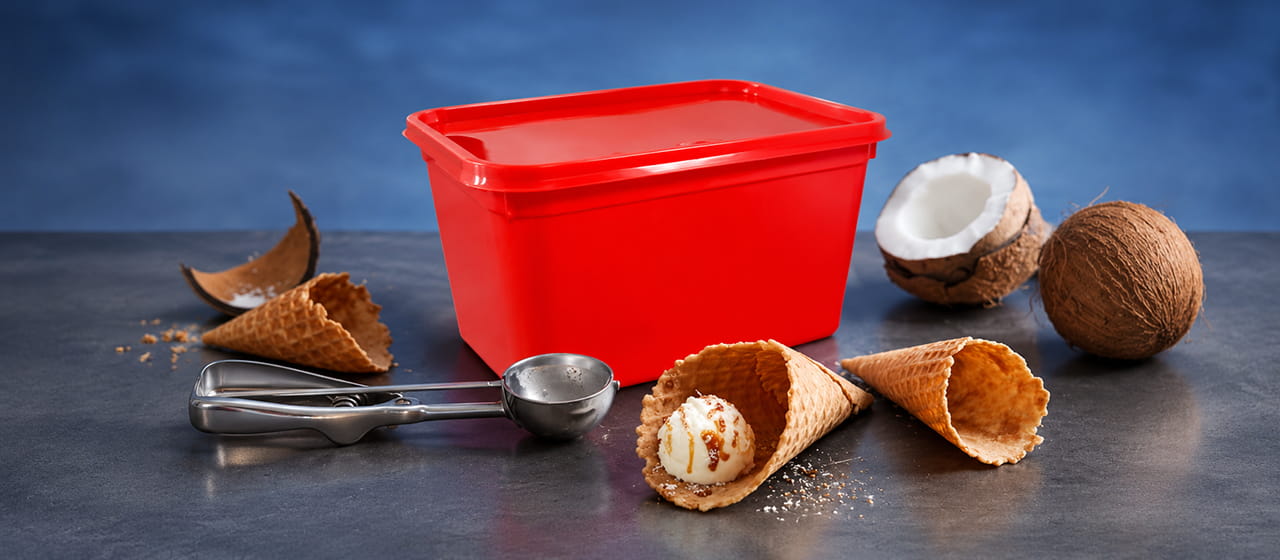
Here’s what a small slip in portion size costs.
Say your target is a 60ml scoop, but staff are actually serving 75ml. A 4-litre tub drops from 66 scoops to 53. That’s 13 fewer portions per tub.
At £2.50 per scoop, you lose £32.50 on every tub. Get through 20 tubs a week in summer, and that’s £650 a week you never see.
This is a familiar problem across the trade. On the eGullet forum, contributors who have worked in ice cream shops describe over-scooping as a constant frustration for owners, because the server, not the business, controls the portion.
A few habits keep portions on target:
- Use one scoop size per station, so there’s no reaching for the bigger one when it’s busy.
- Do a weekly weigh check, scooping five portions and comparing them with your target.
- Train new staff on the sample cup, so they learn what a correct portion looks like.
- Sell by cup size, not scoop count, so customers judge the cup rather than counting balls.
Selling small, medium and large also makes upselling easier. Our guide to menu ideas covers how to structure sizes and add-ons so the average spend goes up while portions stay controlled.
Planning Stock for Events and Seasonal Peaks
Once you know your real scoop count, you can plan stock with confidence instead of guesswork.
A Worked Event Example
Imagine a summer fete with 400 expected customers. Records from past events suggest most people buy one scoop, and some buy two, giving an average of 1.6 scoops each.
- 400 customers × 1.6 scoops = 640 scoops
- 640 scoops × 70ml = 44.8 litres
- Add 10% for losses = about 49 litres
That’s ten 5-litre Napoli tubs or thirteen 4-litre tubs.
Give your best sellers a larger share of the total. Vanilla, chocolate and strawberry usually carry an event, while specials work best in smaller quantities.
Remember the packaging too. 640 scoops at 1.6 per customer means about 400 cups or cones, plus spoons and napkins. Order a margin above that, because running out of cups ends sales just as quickly as running out of ice cream.
Building In Heatwave Headroom
UK demand now swings sharply with the weather. NIQ figures reported by The Grocer show ice cream value sales jumped 87.9% in the week to 27 June 2026, with unit sales up 93.2%. In the convenience channel, insight agency Talysis recorded a record week of £18.2m, 56% higher than the previous year’s peak.
For scoop businesses, a heatwave can roughly double a normal week’s trade. Plan for it with these steps:
- Check the ten-day forecast every Monday from May to September.
- Keep enough freezer space for at least one extra week of your top flavours.
- Order packaging before hot spells, not during them, when supplier stock is under the most pressure.
Mobile traders feel these swings most of all. If you run a van, our guide to starting an ice cream van business covers how to set up stock and equipment for unpredictable pitches.
For larger events or a busy season ahead, contact our team to plan bulk tubs, serving cups and next-day delivery around your calendar. If you’re producing your own batches, our 4 litre containers stack neatly for freezer storage between events.
Count Your Scoops Before the Queue Forms
Working out how many scoops in a tub of ice cream takes five minutes, and it shapes your pricing, ordering and profit for the whole season.
- Divide tub volume by your true scoop size, then take off 10% for real-world losses.
- Measure your scoops yourself rather than trusting the number stamped on the handle.
- Match your serving cups to your portions, so staff aren’t tempted to overfill.
- Treat over-scooping as a cost. Fifteen extra millilitres per scoop can quietly cost hundreds of pounds a week.
- Plan events from customer numbers upwards, and keep stock and packaging in reserve for heatwaves.
Get these numbers right before the summer rush, and every tub you open works harder for your business.