Next working day delivery by
 CALL US
 Monday to Friday

Cones are the fastest-growing product segment in the UK ice cream market, yet many operators still order the same box of wafers they always have. The cone you serve shapes flavour, structure, drip control, perceived value and margin, so treating it as a commodity leaves money on the counter. This guide covers every ice cream cone type a UK operator is likely to stock, what each one is actually made of, and which serve format each one suits best.
The three standard cone families are wafer, sugar and waffle. Beyond those sit a growing range of dipped, coloured, gluten-free and speciality formats. Knowing the differences helps you match cone stock to price point, customer, and menu.
What an ice cream cone is actually made of
Every commercial cone starts from the same short ingredient list. Flour, sugar, fat and often egg are combined into a batter, poured onto a heated iron, and either pressed flat or rolled while still warm. The batter recipe is what separates one cone type from the next. Small changes in sugar type, fat content and whether egg is included produce very different results in flavour, crunch and moisture resistance.
A plain wafer cone contains around 23 kcal, which is why cone calorie content rarely dominates the nutritional profile of a served ice cream. The scoop and toppings do most of that work.
The wafer cone (also called the cake cone)
The wafer cone is the light, flat-bottomed cone most people picture from childhood. The batter is a blend of cake, pastry and tapioca flours with no egg, giving it a mild, subtly sweet flavour that stays out of the way of the ice cream on top.
Structurally, wafer cones have a flat base and a ridged lip. The flat bottom is the defining feature. It lets the cone sit on a counter or in a car cup holder without spilling, which is why it became the standard for soft serve when Dairy Queen scaled the format in the 1940s.
Best for: soft serve, high-volume vans, children’s cones, and any operation where speed of service and cost per unit matter more than premium presentation. Wafer cones are the cheapest cone tier and the workhorse of most UK counters.
The sugar cone
Sugar cones are denser, sweeter and structurally stronger than wafers. The batter uses brown sugar or molasses in place of some of the white sugar, giving a caramelised flavour that complements vanilla, chocolate and fruit ice creams without competing with them.
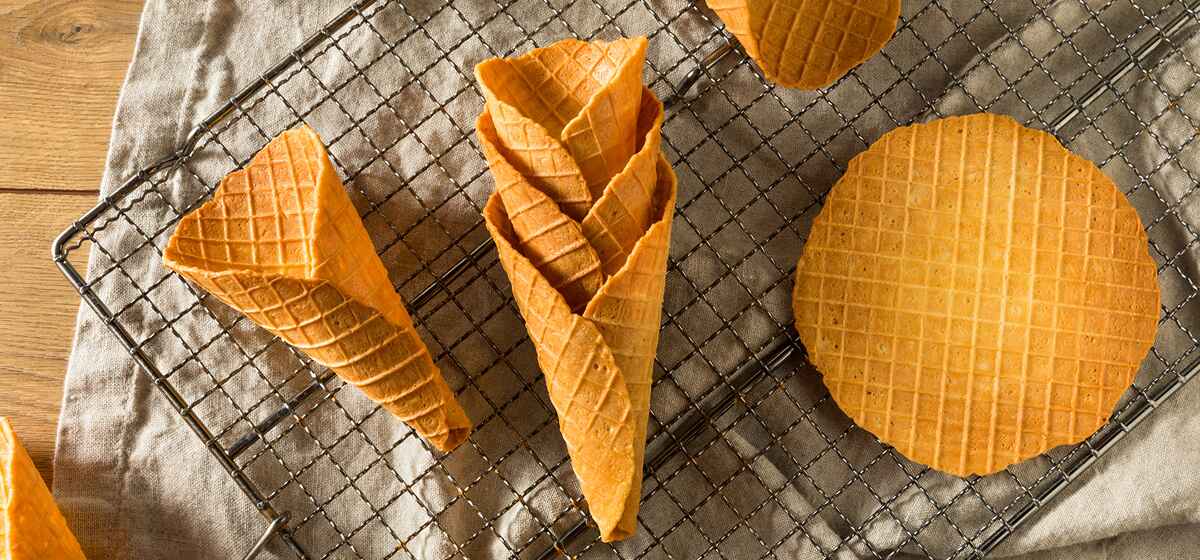
The shape is different from a waffle cone, despite the two often being confused. Sugar cones have a pointed bottom and a flat, solid brim designed for stacking scoops. Waffle cones have jagged, rounded rims. Sugar cones are also usually smaller and considerably sturdier, which is why they became the standard for pre-filled retail ice cream products such as drumsticks.
Best for: single or double scoops without heavy toppings, customers who eat slowly (the dense structure resists sogging), and any counter where a classic look matters. Mid-price on cost per unit.
The waffle cone
Waffle cones are the premium tier of the standard three. The batter typically contains flour, egg, butter, sugar and milk, sometimes with vanilla or cinnamon. That richer recipe produces a buttery aroma customers can smell before they order, which is why fresh in-house pressing has become a footfall driver at higher-end parlours.
Waffle cones are larger than sugar cones, with a wider mouth and a jagged rounded rim rather than a flat brim. The size and grid texture signal quality before the first bite, and the wider opening holds toppings that would spill from a sugar cone.
Best for: premium scoop counters, gelaterias, sundaes with sauce and sprinkles, and any menu positioned on quality. Waffle cones are the most expensive standard cone tier but carry the highest perceived value. According to a 2024 IDFA and Morning Consult survey of over 2,200 US adults, waffle cones were the most preferred format at 29%, more than double the 12% who preferred sugar cones.
Speciality cones every trade counter should know
The standard three cover most volume, but the speciality range is where operators drive higher spend per customer. Dipped waffle cones in particular are shaping impulse sales through 2026.
Dipped and coated cones
Chocolate-lined cones and cones with sprinkle-coated rims turn a standard serve into a premium item. A wholesale-industry report on summer 2026 notes that bright colours, textured coatings and eye-catching toppings continue to perform particularly well during peak summer months, especially when paired with gelato, soft serve, milkshakes and sundae concepts. Adding a chocolate lining also creates a moisture barrier that slows drip-through.
Coloured and branded cones
Coloured cones let operators match a serve to a brand palette or season. Pastel shades photograph well, which matters on social feeds where dessert imagery drives footfall.
Gluten-free cones
Around a quarter of UK consumers actively look for free-from options. Stocking a gluten-free cone lets you serve the whole group rather than losing the booking when one person cannot eat wheat. Verify supplier certification and manage cross-contact on the counter.
Mini cones
Mini cones work for tasters, kids’ portions, and dessert flights. They also open up event catering where a full cone is too much.
Waffle bowls and double-scoop cones
Waffle bowls turn any sundae into an edible dessert. Double-scoop cones split a cornet into two chambers, useful for two-flavour serves and photogenic menu items.
A brief history of the ice cream cone
Cones existed before they were mass-produced. The first documented recipe appeared in the United Kingdom in 1888. In the United States, Italo Marchiony filed a patent for an ice cream cup mould in 1903, and the 1904 St Louis World’s Fair popularised the rolled waffle cornucopia after a waffle vendor helped an ice cream stall that had run out of dishes. The flat-bottomed cake cone arrived in the 1940s, credited to Joseph Shapiro of Maryland Cup Corporation, and became the format Dairy Queen used at scale. WikipediaIDFA
Matching the cone to the serve format
The right cone depends on what you are serving and how quickly it needs to move.
- Soft serve: wafer, every time. The neutral flavour matches the mild ice cream and the flat base fits standard holders.
- Scooped gelato or hard ice cream: sugar or waffle. Both are sturdy enough for weight, and both suit premium pricing.
- Sundae or dessert bowl: waffle bowl for edible presentation, or a lidded wafer cup for takeaway.
- Kids’ portions: flat-bottomed wafer, ideally with a holder to reduce spills.
- Premium upsell: dipped waffle or coloured cone at a 50p to £2 premium over the base serve.
Stocking cone holders in the right sizes speeds up service and cuts breakage waste, especially at a busy van window.
Storage, cost and handling notes
Cones are simple products with one main enemy: humidity. A cone that has absorbed moisture from the air is soft, chewy and unsaleable. Keep sealed until use, rotate stock, and store away from steam sources such as coffee machines or hot food counters. Waffle cones absorb moisture fastest because of their higher fat and egg content.
Cost per serve matters more than headline price. A cheap cone that arrives with 10% breakage or that sogs before service is not saving money. Buy from suppliers who pack and ship properly, and check breakage rates on your first order from any new source.
For a wider view of what is shaping UK dessert menus this year, our 2026 trends guide covers the flavour and format directions worth building around.
Choosing the right cone stock for your business
The cone you stock should reflect your price point, your customer and your speed of service. Most operators benefit from at least two tiers on the counter: a standard wafer for the entry-level serve and a waffle for the upsell. That structure gives customers a choice at the till, which alone tends to lift average spend.
Match the tier to how you position your menu. A seaside van running £2 cones on a bank holiday needs wafer volume and dipped waffle upsell capacity. A gelateria charging £5 a scoop should not be serving from a wafer at all. A café adding dessert to an existing lunch menu can start with a small range of sugar or waffle cones and grow from there.
For counter format ideas that lift spend per customer, our menu ideas guide covers structure, upsells and format decisions in more detail. And whatever tier you settle on, source your ice cream cones from a trade supplier who can pack them properly and ship them without breakage. TAS Group stocks the full range covered in this guide, from wafer through to dipped waffle, in trade quantities.
Frequently asked questions
What is an ice cream cone made of?
Most cones are made from flour, sugar and fat, cooked as a batter on a heated iron. Wafer cones use a blend of cake and pastry flours with no egg. Sugar cones add brown sugar or molasses. Waffle cones include egg, butter and often milk, which gives them their richer flavour.
Who invented the ice cream cone?
The first documented cone recipe appeared in the United Kingdom in 1888. Italo Marchiony filed a US patent for an edible cup mould in 1903. The rolled waffle cornucopia was popularised at the 1904 St Louis World’s Fair, and the flat-bottomed cake cone was introduced in the 1940s by Joseph Shapiro of Maryland Cup Corporation.
How many calories are in an ice cream cone?
A plain wafer cone contains around 23 kcal. Sugar and waffle cones sit higher because of denser batter and added sugar or butter, typically 40 to 60 kcal depending on size. The ice cream and toppings account for most of the calories in a served cone.
What is the difference between a wafer and a waffle cone?
Wafer cones are light, flat-bottomed and neutral in flavour. Waffle cones are larger, pointed, sweeter and richer, made with egg and butter. The two are often confused because both use grid-pattern irons, but the recipes and structures are quite different.
Are ice cream cones gluten-free or vegan?
Standard wafer, sugar and waffle cones contain wheat flour, so they are not gluten-free. Wafer and sugar cones are usually vegan because they contain no egg or dairy, but waffle cones usually contain both. Dedicated gluten-free and vegan cones are available from trade suppliers with the relevant certification.