Next working day delivery by
 CALL US
 Monday to Friday
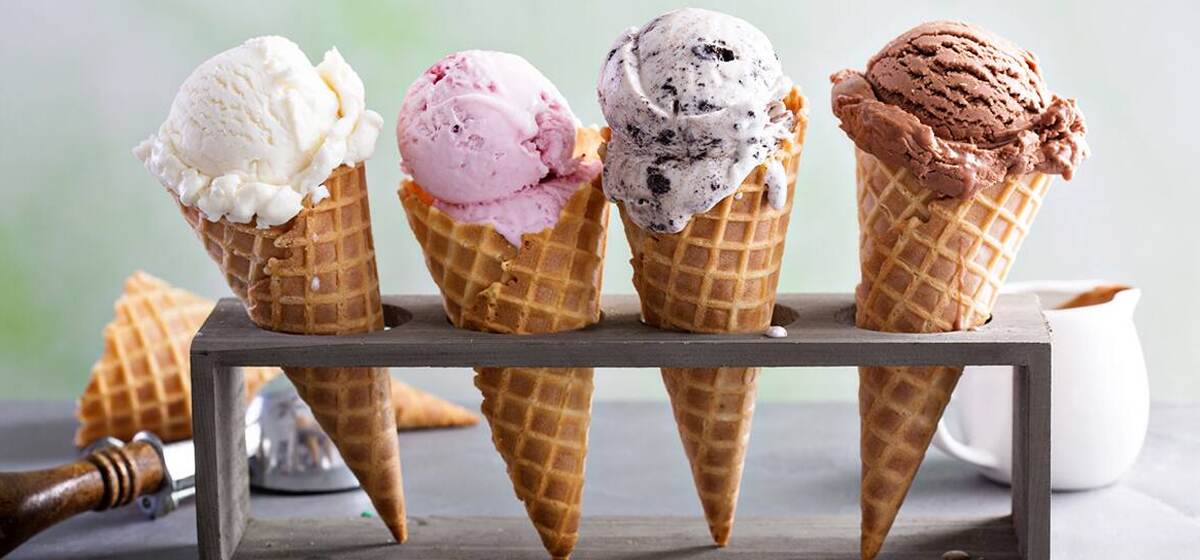
The UK out-of-home ice cream market was worth £605 million in 2024, with 70% of consumers eating ice cream outside the home at least once a month. That is a significant volume of footfall passing through independent parlours, dessert shops, and cafés every summer.
Yet many operators focus almost entirely on which flavours to stock and give little thought to how the menu is built, how it sells, or how much each customer actually spends. Flavour matters, but it is only one part of a profitable ice cream business. The structure of your menu, the way your staff talk about your products, the formats you offer, and the packaging you use all have a direct effect on revenue.
This article covers practical ice cream menu ideas that independent operators can act on now, whether you are setting up for the summer season, reviewing what is and is not working, or planning ahead for the months to come.
Build Your Menu Around the Right Categories
Before you think about specific flavours or specials, the categories on your menu need to be right. A well-structured menu guides customers towards a purchase quickly. A poorly structured one slows service, creates hesitation, and costs you sales.
The core sections every menu should include
Most successful ice cream menus are built around six categories:
- Scoops and cones (your baseline product)
- Sundaes and built desserts
- Soft serve
- Takeaway and delivery formats
- Drinks and pairings
- A seasonal specials slot
Not all of these need to be large sections. A seasonal slot might be just one or two flavours at a time. The drinks and pairings section might be as simple as a milkshake and a coffee. The point is that each category serves a different customer need, and covering them gives you more opportunities to sell at every price point.
Why fewer flavours often means more sales
When customers face too many options, the decision becomes harder rather than easier. The result is hesitation, slower queues, and less confident purchasing.
A focused range of 10 to 15 flavours with a rotating seasonal slot tends to outperform a board of 40 or 50 options. Service is faster, staff can describe each flavour confidently, and customers leave feeling certain about their choice rather than uncertain about all the ones they did not pick.
The most successful independent parlours edit their permanent range tightly and use limited-edition specials to introduce novelty. Rotation keeps things fresh without the complexity of managing dozens of flavours year-round.
Use Toppings and Upgrades to Increase Every Transaction
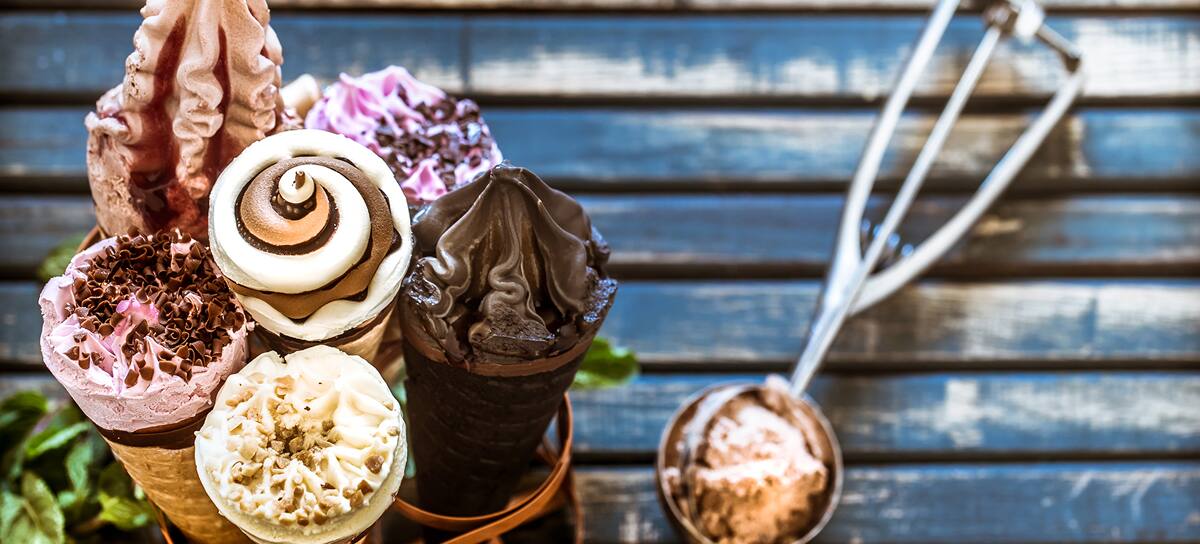
Toppings are one of the highest-margin items on any ice cream menu and one of the most consistently undersold. A sauce or inclusion that costs a few pence to apply can justify a 30p to 50p addition to the price. Across a full day of trading, that adds up considerably.
Research suggests that training staff on upselling techniques can increase average spend by 20 to 35%. The barrier is not customer reluctance. Most people are happy to add a topping when it is suggested to them. The barrier is that it is not being suggested.
A few approaches that work in practice:
- Verbal prompts at point of sale: “Would you like a sauce or a flake with that?” is a natural addition to any transaction. It does not feel pushy. It feels like service.
- Visual display: a counter display of your sauces and inclusions prompts customers to ask before staff even need to mention them.
- Upgrade framing: “Would you like to make that a double scoop?” frames the suggestion as a positive option rather than a question about spending more.
- Bundle pricing: a cone plus a soft drink at a set price increases average spend and reduces decision friction. Family bundles work well at high-footfall locations.
Our topping sauces and cones include a wide selection of flavoured sauces, inclusions, and waffle cones designed to make upselling straightforward. The right product range on the counter does much of the selling work for you.
Make Seasonal Specials a Planned Part of Your Calendar
Limited-edition flavours are one of the most commercially effective tools available to independent ice cream operators and they are consistently underused.
According to Mintel and Spark research, 47% of Britons find brands that regularly release new flavours more appealing. Among people who see specialist chains as a treat, that figure rises to 56%. A limited edition creates a reason to visit now, before it goes, and a reason to come back to see what is next.
Plan seasonal specials in advance rather than leaving them to chance. One or two rotating specials per month is manageable operationally and gives you a consistent story to tell on social media. Photograph each new special before service starts. A good image shared online the morning of a launch can drive real footfall that day.
National Ice Cream Day falls on Sunday 19 July 2026, in the middle of National Ice Cream Month. It is a ready-made commercial hook. A named special tied to the date, a brief social post, and a counter sign is all it takes to make something of it.
You do not need to be wildly experimental to get attention. Vanilla ice cream with olive oil and flaky sea salt, for example, has moved from fine dining menus into mainstream parlour specials over the past 18 months. It costs very little to produce, photographs well, and gives customers something specific to talk about.
For more on the flavour and format trends shaping the UK market this year, our 2026 trends guide covers the key directions in detail.
Treat Free-From as a Revenue Stream, Not a Footnote
Around 28% of UK ice cream consumers are interested in vegan options. A further 26% want reduced-sugar alternatives. Together, that is a substantial share of the market, and operators who address it with only a single poorly positioned option are leaving money behind.
The commercial case for free-from is not primarily about the individual customer with a dietary need. It is about the group. When one person in a group of friends or a family cannot eat your main range, the whole group is more likely to go somewhere else. Catering well for dietary requirements means you keep everyone.
At minimum, every ice cream menu should include:
- At least one dairy-free or vegan scoop option
- At least one reduced-sugar or lower-calorie alternative
- Clear, visible labelling, both for customers and because allergen disclosure is a legal requirement in the UK
Under UK food information regulations, businesses selling food to the public must provide allergen information for every product. For ice cream, milk, eggs, gluten, nuts, and soya are all common allergens that must be disclosed. This applies to specials and seasonal additions as well as your permanent range.
One presentation point that is often missed: dairy-free products served in the same quality cups and tubs as the main range signal to customers that they are not second-tier options. Serving a vegan gelato in a flimsy cup while the standard range comes in a branded tub sends the wrong message before the customer has tasted anything.
Reframe Soft Serve as a Premium Product
Soft serve sits at the budget end of many operators’ menus. In practice, it is one of the highest-margin products you can serve.
The cost per portion can be as low as 30p to 50p once mix, cone, and overheads are factored in. At a selling price of £3.00 to £4.00, the margin is strong. The challenge is positioning.
Dipped waffle cones have become one of the most commercially effective additions to summer 2026 menus. Chocolate-coated, sprinkle-covered, or flavoured variants are visually distinct, photograph well, and justify a higher price through presentation alone.
The same product in a standard cone is a £2.50 item. The same product in a dipped waffle cone with a drizzle of sauce and a premium topping is a £4.00 to £4.50 item. The ice cream is identical. The difference is presentation.
Milkshakes built on a soft serve base follow the same logic. A thick, well-presented milkshake in a branded cup with a paper straw is a strong mid-price product using the same equipment and similar ingredients. Our syrups range gives you the flexibility to build a milkshake menu across multiple flavours without significant additional complexity.
Prepare Your Menu for Delivery and Takeaway
Research from the December 2024 trading period found that 64% of takeaway orders included a dessert, with ice cream among the most commonly added items. Operators not set up for delivery are missing a growing portion of their market.
The most common problem is that menus built for in-person service are copied onto delivery apps unchanged. Two things need to change.
First, format. Not everything travels well. A flake cornet will arrive broken. A layered sundae in a light cup will collapse. Only list items you are confident will arrive in good condition. Our paper ice cream tubs cover multiple portion sizes and hold product reliably in transit.
Second, visibility. Most platforms let you create separate menu categories. A dedicated desserts section means customers find your ice cream without scrolling your full menu. Checkout prompts can suggest an add-on sauce, a size upgrade, or a second scoop. They cost nothing to set up.
Photography matters more on delivery platforms than anywhere else. A clear, well-lit image against a clean background will outperform a blurry or absent one every time.
A Menu That Sells Is Built, Not Guessed At
The ice cream businesses that sell the most are not always the ones with the best flavours. They are the ones that have thought carefully about structure, communication, and how every step from the first look at the board to the final transaction is designed to encourage a purchase.
- Build around clear categories rather than an exhaustive flavour list
- Train staff to prompt for toppings and upgrades at every transaction
- Plan seasonal specials in advance and tie them to commercial dates
- Give free-from options the same prominence and packaging quality as your main range
- Position soft serve as premium through presentation
- Build a separate delivery menu using formats that travel well
Browse our full ice cream packaging range for tubs, cups, cones, and accessories suited to in-person and delivery service.